

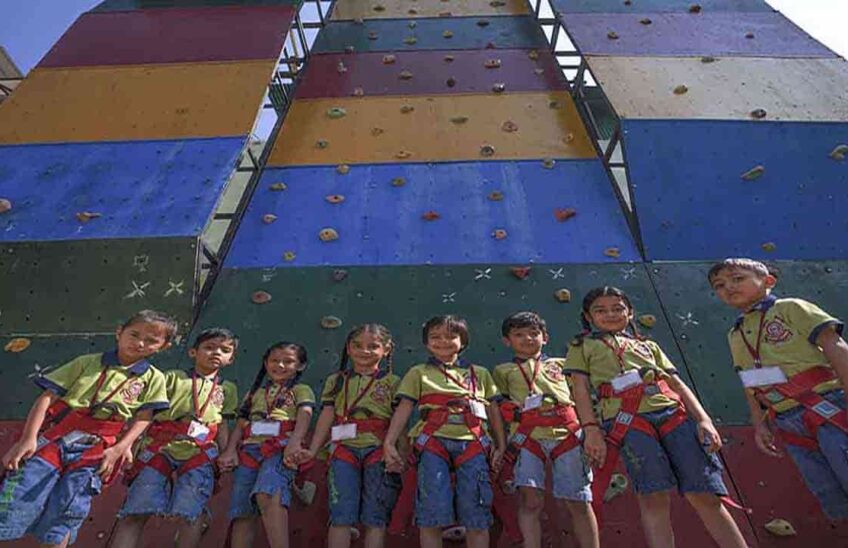
Walk into any classroom filled with young children and chances are, you’ll hear laughter, chatter, and the rustling of building blocks or art supplies. It might seem like fun and games on the surface, but look a little closer and you’ll see something much deeper unfolding. Through play, children are learning how to navigate the social world. They’re not just stacking blocks or pretending to be doctors. They’re figuring out how to take turns, how to negotiate, how to cooperate. And that’s exactly why play-based learning has become such a valuable part of early childhood education.
So what is play-based learning, and how does it help in building social skills? Let’s unpack it in a way that feels relevant to everyday parenting and teaching.
What is Play-Based Learning in Pre Schools in Surat?
At its core, play-based learning is an approach that uses the natural curiosity and creativity of children as the foundation for education. Instead of sitting children down with worksheets, educators create environments where learning happens organically through play. It could be through pretend games, role-playing, outdoor activities, or structured group tasks.
The idea is simple: children learn best when they’re engaged, and nothing engages a young mind quite like play.
Why is it Important for Social Skill Building to Start in Pre-primary Years?
Social skills aren’t just about being polite or making friends. They form the foundation of emotional intelligence, collaboration, and future relationship-building. In the early years, the brain is incredibly flexible. Habits formed during this stage tend to stick.
Children in best pre nursery schools in surat who are exposed to play-based methods often show stronger cooperation, better communication, and more confidence when interacting with peers. This is particularly evident in environments that offer open-ended play opportunities, where children are free to invent their own rules and adjust them as they go.
And here’s something to think about. If a child never gets a chance to lead during play, how will they learn leadership? If they never face conflict on the playground, how will they learn resolution?
How to Encourage Play-Based Social Learning at School and Home
Whether you’re a parent or a teacher, supporting social development through play is easier than you might think. It doesn’t require fancy materials or structured lessons. Just space, time, and a bit of adult guidance when necessary.
Here are a Few Ways to Support It:
Set up shared activities like puzzles, building sets, or pretend kitchens that naturally involve more than one child
Resist the urge to jump in too quickly during minor disagreements. Let children try to solve it themselves before stepping in
Rotate themes regularly to spark new interactions and challenges. One week could be a doctor’s clinic, the next a post office
Encourage mixed-age play when possible. Younger children learn by observing, while older ones get a chance to lead
At many pre primary schools Surat has to offer, teachers are already incorporating these strategies in classrooms. It’s about creating a rhythm of play that allows children to explore roles, emotions, and group dynamics in a safe and supported space.
Why This Matters More Than Ever in Early Childhood Education
In an increasingly digital world, where children are exposed to screens earlier and for longer durations, real-life social interactions are more critical than ever. Play-based learning offers a counterbalance. It brings children back into face-to-face interactions, helping them read expressions, respond to tone of voice, and adapt to the unpredictable nature of human behavior.
Moreover, social-emotional skills are closely tied to academic success. Research from the Harvard Center on the Developing Child shows that children with strong social skills tend to do better in school, and even later in life in terms of employment and relationships. You can explore this further here.
And if you’re looking for more research-backed insight into play and learning, the Lego Foundation has done excellent work in this area.
Ultimately, play is not a break from learning. It is learning. It’s where children build the kind of people skills that will carry them through life. So the next time you see a group of preschoolers huddled around a sandbox or role-playing superheroes, know that their brains are hard at work.
They’re not just playing. They’re practising life.
Frequently Asked Questions
Q1. What kind of inter-school co-curricular competitions are held in the best CBSE schools in Gujarat ?
A. The best CBSE schools in Gujarat organise inter-school competitions in areas like sports, debates, quizzes, music, and arts. These events help students gain confidence, build teamwork skills, and experience healthy competition outside the classroom.
Q2. What type of entrance exam do GSEB schools Surat usually conduct for admission ?
A. Most GSEB schools Surat do not conduct formal entrance exams for lower grades. Instead, they may hold informal assessments or basic interactions to gauge the child’s learning level and readiness for the class.